
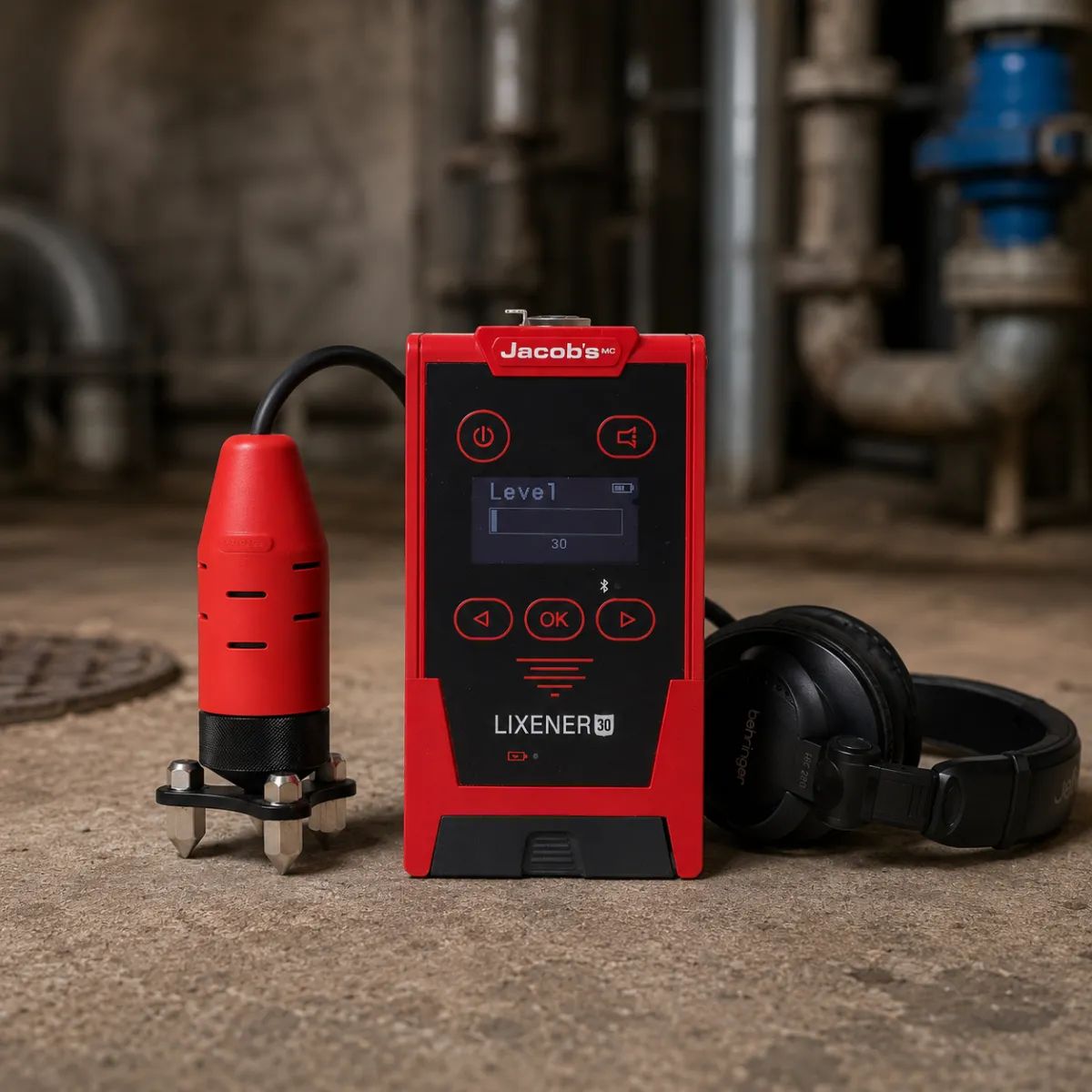
—— "Solve Complex Leaks, Anywhere"
LIXENER30
Lixener30 is the ideal tool for tackling a wide range of challenging leak detection scenarios.
Hear even the faintest leaks – and dig with confidence.
One tool for nearly any job — slab, underground, walls, pools, gas, and vacuum lines.
Cut through traffic, wind, and electrical hum
– lock in on the leak sound.
$2,950

Pay over 6 months with 0.00% APR
1 Year Warranty + Lifetime Service
U.S. service center · Melbourne, FL
Units Ship Within 1 Business Day.*

40+ Countries
Working pros use Sniffer430 daily on every continent (except Antarctica).

Ships in 24hrs*
From our U.S. Service and Distribution center in Melbourne, Florida.

1 Year Warranty
1-Year Manufacturer Warranty + Lifetime Service. We'll get you back in business ASAP.

Real Support
If you have any questions while using our equipment, just give us a call.
—— How It Works
Simple Process. No Calibration Needed.
Amplify the leak and cuts the background noise — Walk the line, follow the sound, find the leak.
Step 1
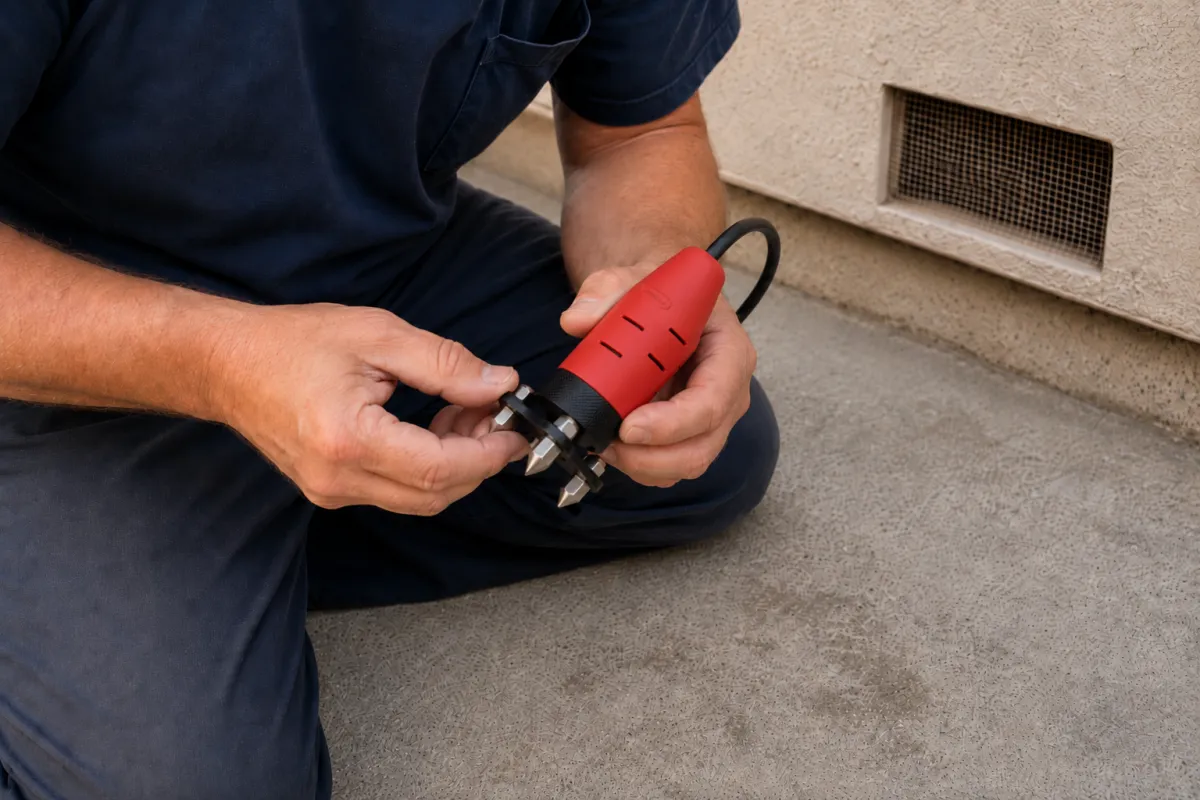
Pick Sensor Attachment
Pressurize the line, choose the attachment for the surface you are on: Probe Rod for soil and grass, Tripod or Flat Foot for slab, tile, and walls, Magnetic Base for metal pipe and fixtures.
Step 2
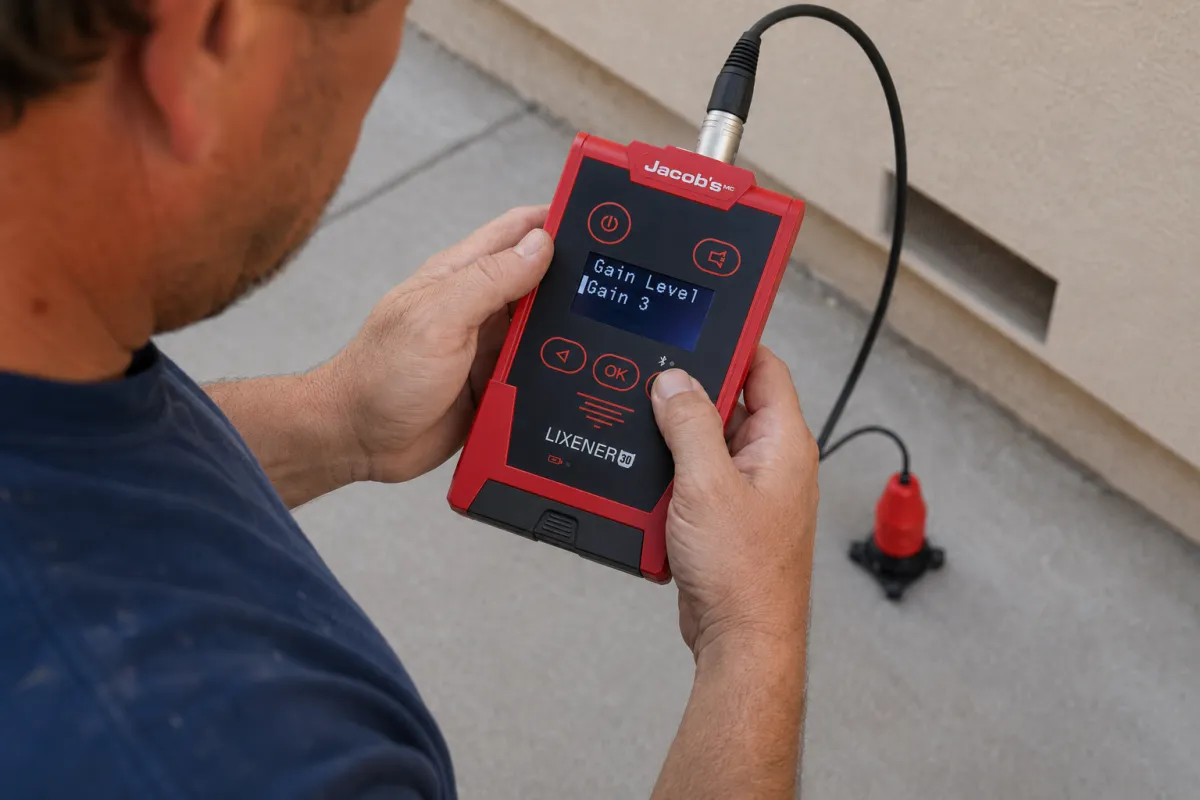
Set Your Filters & Gain
Start at gain 3, filters off. Raise the gain to pull up faint leaks; add filters to cut traffic, wind, talking, and electrical hum until the leak sound is clear.
Step 3
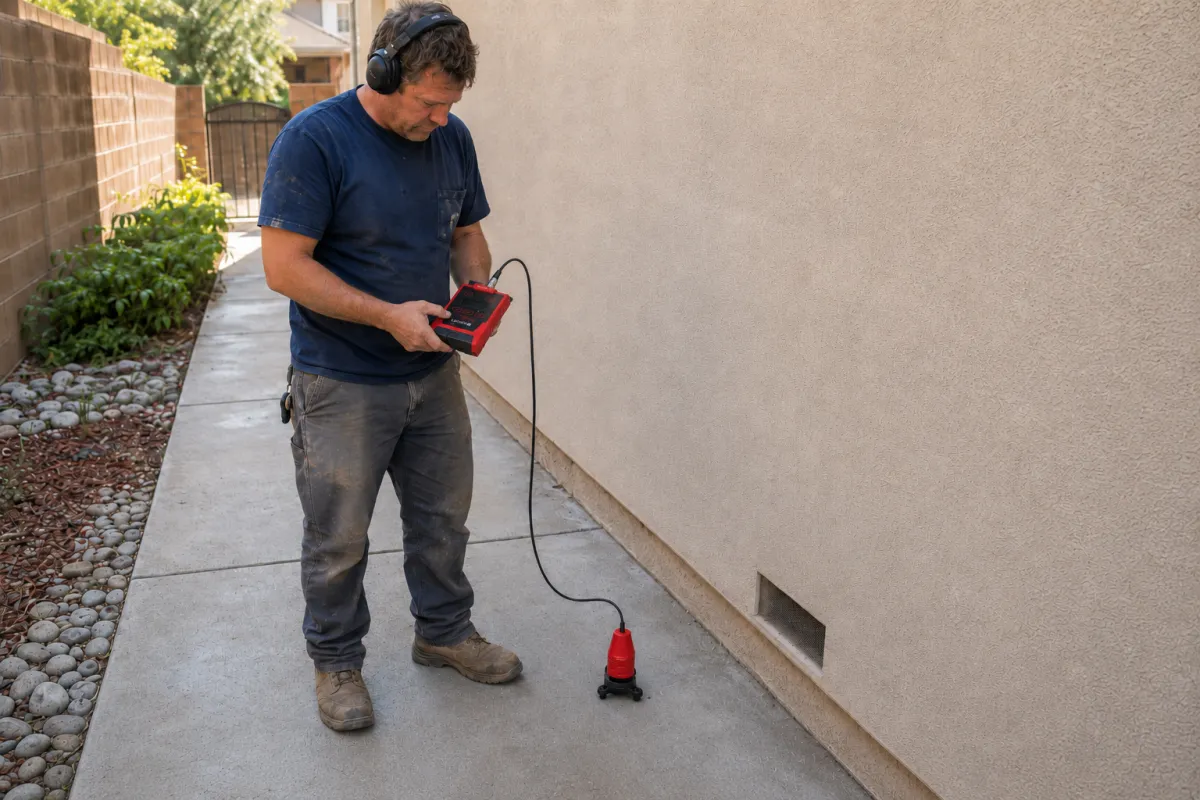
Walk The Line & Pinpoint
Follow the loudest, most consistent sound. Watch the 1–1000 intensity meter — the point highest reading is your hotspot. Confirm with a pressure drop, to see if the sound drops. Then dig once.
—— Watch Lixener30 In Action
Watch These Video To Learn How Lixener30 Works.
See how simple it is to use!

—— Here's The Math
This Tool Pays For Itself.
Usually in a few jobs.
Pros typically charge $300–$1,300 per leak detection.
Drag the sliders to see what Lixener30 means for your business.
Your numbers
Lixener30 costs $2,950. At $450/job × 3 jobs/week, you pay it off in under 3 weeks. Everything after that is profit on a service you used to outsource — or walk away from.
—— Will It Work On My Job?
If the leak is under pressure, you can hear it.
The versatility is the point. One acoustic detector across the widest range of complex jobs working pros run.

City & Utility Lines
Large Diameter Lines
Listen for leaks on Long municipal mains and big commercial lines that are impractical to charge with tracer gas.

Irrigation
Yard & Irrigation
Drive the aluminum probe rod near the pipe through soil and grass, getting you right next to the sound source to check without digging.

Air / Gas / Vaccum
Pressurized Air, Gas, & Vaccum
Compressed air, natural gas, propane, and vacuum systems all make sound under pressure — and the Lixener30 hears it.

Monitoring
Water Flow Monitoring
Feed the BNC output to a recorder to track flow over time on commercial buildings and city lines.

Pool & Spa
Pool Plumbing
Find leaks in the pool or spa loop — including behind plastic liners — without jackhammering the deck on a hunch.

Slab & Under Floor
Slabs & Walls
Locate leaks underfloors and in-walls from the surface so you open one access point at the leak — not breaking concrete on a guess.

Fire Supression
Fire Suppression Systems
Pinpoint pressure loss in fire-suppression systems in commercial and industrial buildings without dropping the whole system.

Liners & Barriers
Plastic Liners & Vapor Barriers
Vapor barriers trap tracer gas before it surfaces. Sound travels through the barrier — so the Lixener30 works where gas methods stall.
—— What's in the box?
System Highlights
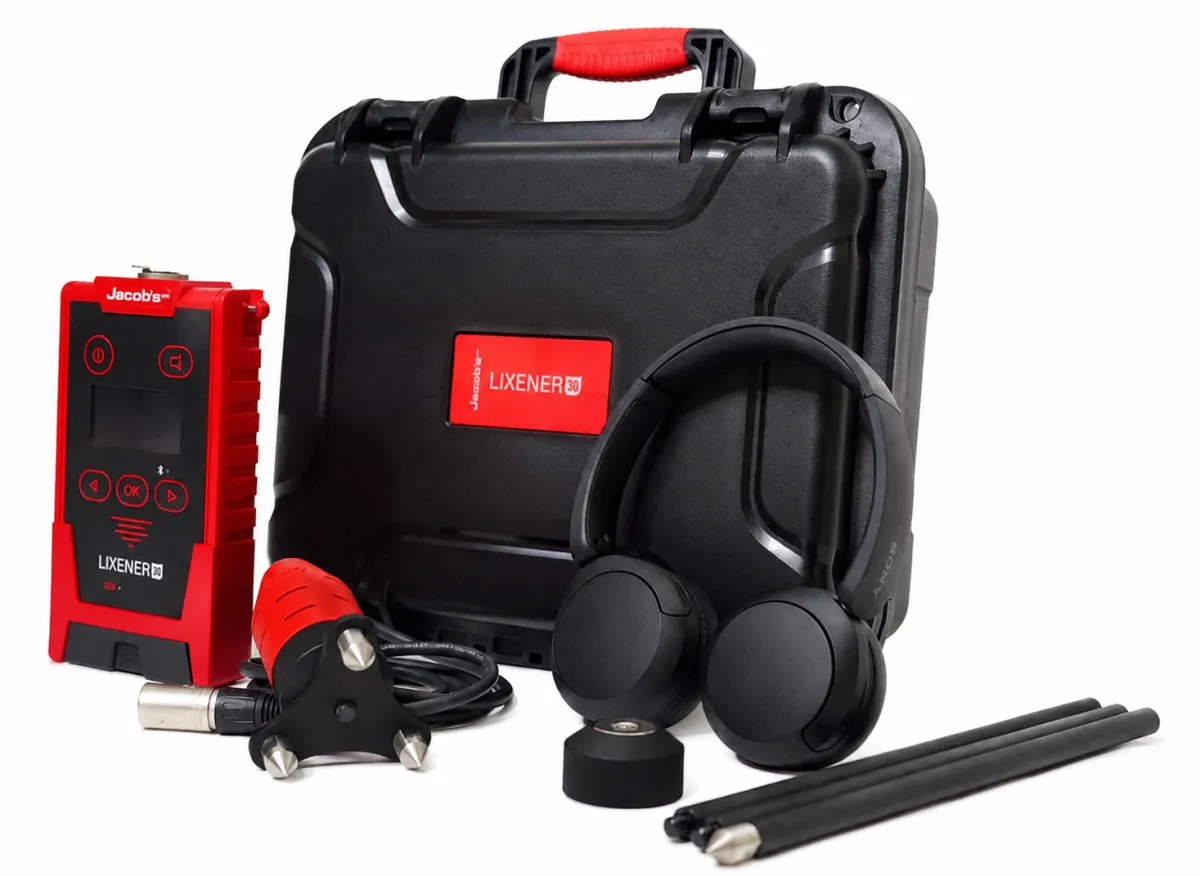
System Design
5-Step Gain Selection - Amplify difficult to hear leak sounds.
Multiple Filters - Selectively block out environmental sounds and focus on the leak.
Sound Level Display - Shows a visual of the sounds the sensor is picking up so you can "see" when there is sounds, even if the human ear has difficulty perceiving them.
Intuitive Controls - Operation can be understood right away.
Headphones Included - Connects with any Wired or Bluetooth Wireless Headphones.
Audio Output - Useful for Continuous Monitoring and Recording.
Acoustic Sensor
The LIXENER30 acoustic sensor is extremely broadband sensitive allowing you to pick up even the most faint high and low frequency sounds out there.
A versatile set of accessories, including a tripod, probe rods, and magnetic foot, allows for effective use of the sensor on different surfaces, including soil, grass, concrete slabs, metal pipes, and more.
What's Included
Lixener30 Unit
Lixener30 Acoustic Sensor
Headphones (Works with any wired or wireless headphones)
Tripod Base
3 Piece Probe Rod
Magnetic Base
Rechargeable battery (Inside Device)
USB-C Charger
Hard Case with Custom Fit Interior Foam
User Manual
Warranty Information
1 Year Manufacturer's Warranty + Lifetime Service. We’ve got your back. If anything goes wrong due to defects in materials or workmanship, we’ll repair it at no cost, no questions asked.
Service
Our Service Departments in the US and Europe are available to repair or replace damaged parts. We always aim to have an extremely fast turn around time. Get in touch with our team for quick troubleshooting assistance.
See LIXENER30 Customer Videos
—— Common Pushback
The honest answers to the things you're thinking right now.
01
"Isn't acoustic old-school and inconsistent?"
Cheap acoustic gear is. The Lixener30 is state-of-the-art. Its sensor picks up sounds far too faint for the human ear, and the level readings on screen let you spot even the quietest leak. Filter out the frequencies you don't want, and the leak sound comes through clearly. A professional acoustic detector is an essential piece of kit: It's the one method that works on huge variety of use cases and will always help you solve complicated leak scenarios.
02
"CAN I DEMO ONE OR RENT ONE FIRST?"
We don't do demos or rentals — and you don't need them. Lixener30 is designed so operating it can be understood on day one. Watch the videos here on our site and you'll have the workflow down in ten minutes. We sell our equipment every day in over 40 countries so a rental fleet isn't realistic. If you do have any questions while you're out in the field, just give us a call. We're here to help.
03
"WHAT IF IT BREAKS? HOW DOES THE WARRANTY ACTUALLY WORK?"
1-year manufacturer's warranty against defects. If something seems off, just call us — if we ever get calls, it's usually a quick process fix over the phone. If the unit actually needs hands-on service, ship it to our service center in Florida. The day it arrives, we fix it, and it ships back to you the same day. After the warranty period it's the exact same process — you only pay for the parts that need replacing. Like going to a mechanic.
04
"I'm Not experienced enough to tell a leak from noise"
Honest Answer: Acoustic detection has a learning curve at first, but it's very doable. Start at a spot where you know water is flowing, like a meter or open valve, so your ear learns the leak sound and won't confuse it with water moving through the line. Then work the suspected line using the steps in our demo video, comparing spots as you go. When you think you've found it, drop the pressure — if the sound disappears with the pressure, that's your leak. A few jobs in, it'll feel like second nature.
—— FAQ
The Questions Pros Usually Ask.
Have Additional Questions?
Write Us A Message, We'll Actually Respond ASAP!
When should I use acoustic vs. tracer gas?
Reach for acoustic (the LIXENER30) on large-diameter and long city lines, on jobs with plastic liners or vapor barriers that trap tracer gas, and on pressurized air, gas, and vacuum systems. The SNIFFER430 is our tracer-gas option shines on tiny, slow pinhole leaks under slab where there's little sound to hear, or hidden leaks on large properties. They're complementary: many pros own both, but neither requires the other. They both work well for a huge variety of use cases.
What surfaces does it work on?
Just about all of them. The included accessories cover it: the contact probe for hard surfaces like concrete or soft surfaces like soil or grass; the ground probe rod for getting near buried pipe through soil; the magnetic foot for metal pipe; and the flat base for tile and walls.
What pipe materials does it work on?
Pipe material doesn't decide whether you find the leak — it just changes your approach. Metal pipe carries the leak sound far and at a higher pitch, so it's easy to pick up. Plastic and PVC dampen the sound and drop it to a lower frequency, so you work a little closer and slower. The Lixener30 is built for both: its broadband sensor covers the full range, and you just drop to the low filter band (30–500 Hz) and bump the gain to pull up that fainter, low-frequency sound plastic gives off. Pressurizing a line with air is the standard technique for amplifying a leak's sound.
How do gain and filters actually work — which settings for which job?
Make sure to watch our demo videov ON THIS PAGE for the full breakdown!
Start at gain 3 with filters off; that's the best balance of sensitivity and noise control. Raise the gain to pull up faint or deeper leaks, and lower it in loud environments. Add a bandpass filter (30–500, 200–800, or 400–1000 Hz) to keep only the band the leak lives in, and switch on the 50/60 Hz notch filters to remove electrical hum. The rule of thumb: only filter as much as you need to make the leak stand out.
How deep or how large a line can it handle?
Acoustic depends on the leak making a clear sound, not on a fixed depth limit. A well-pressurized line — with water or compressed air — makes the leak louder and easier to follow, which is why the LIXENER30 does well on deep and large-diameter lines that other methods struggle with. Pressurizing the line is the single biggest thing you can do to improve results.
What headphones can I use?
A set of wired headphones comes with the device. Many customers have personal preference over what kind of headphones they want to use. You can also use any wired headphones or pair any Bluetooth headphones you already own and trust.
What about the BNC output?
The BNC female monitor output connects to an external audio recorder for continuous or long-term monitoring — useful for intermittent leaks and for commercial buildings and municipal lines where you want to capture the signal over time rather than in a single pass.
What's the difference between Tracer Gas, Acoustic, and Thermal Water Leak Detectors?
There are three main leak detection methods: Acoustic, which relies on sensitive hearing of the leak; Thermal, which tracks the temperature difference around the leak; and the Tracer Gas method. Among these, the tracer gas leak detection method is generally most accurate. Acoustic is the most versatile. Thermal is extremely fast but often not practical.
The Acoustic Method is probably the most common "classic" way of finding leaks. Listen for leaks across a wide range of systems, from household plumbing to large-diameter and pressurized air or gas lines.
- Nothing to inject or drain — you just listen (low-pressure systems can be charged with compressed air to boost the sound).
- Self-contained with no consumables to resupply.
- Relies on the leak making a sound, low-pressure leaks can be harder to hear.
- Experience can play a big role in your success rate. (The more leaks you find, the easier you recognise the sounds.)
- Ambient noise can interfere and needs to be filtered out.
- Sound travels differently through soil, concrete, and other materials, which can affect precision.
The Thermal Method uses thermal cameras to find a difference in temperature which can identify a leak's approximate location.
- Fast and non-contact — scan a surface without touching or opening anything.
- Good for visualizing how water is spreading across or beneath a surface like a wall or floor.
- No pressurizing or draining required.
- Only works when the leak creates a noticeable temperature difference.
- Surface temperature can be affected by variables other than the leak.
- Needs a clear line of sight to the surface — it can't see behind objects or deep underground.
- Shows where the water is, which isn't always where the leak is.
- Not suited to underground or pool leaks.
The Tracer Gas Method Injects a non-toxic gas into the line; the gas escapes through the leak and travels up through soil or concrete to your sensor at the surface.
- Pinpoints the exact source of the leak.
- Finds extremely small, pinhole leaks.
- The gas is non-toxic, safe, locally available, and needs no license; lines don't have to be drained, and it works on any pipe material.
- The gas is a consumable you source and refill locally.
- Less practical on very large-diameter or city lines, which need large volumes of gas.
- Tracer gas won't pass through fully sealed materials like plastic liners or vapor barriers without drilling small pilot holes.
- In a large enclosed cavity, like a wall, the gas can fill the whole space and make pinpointing difficult (acoustic and thermal also struggle with cavities).
What about plastic liners or vapor barriers?
This is exactly where an acoustic detector earns its keep. A plastic liner or vapor barrier is sealed, so it blocks tracer gas — but it doesn't block sound. The leak still makes noise that travels through the pipe, the water, and the surrounding material, so you can listen right through the barrier and track it down.
What about sleeved pipes?
Sleeved pipes are tough for any detector — acoustic or tracer gas — because gas (or sound) can travel down the sleeve far from point of the actual leak. Honest answer: this is the trickiest scenario in our industry, there isn't any great options. The Sniffer430 will still help you isolate which run of sleeve is leaking, but expect to do additional confirmation work. Lixener30 can help narrow down the area but it will always depend on the circumstances of the specific leak scenario.
What about in-wall leaks or wall cavities?
Walls are a good fit for the Lixener30. Press the contact probe or flat base against the wall and move across it, comparing spots as you go — the leak sound is loudest closest to the source. Work the suspected area slowly, and when you've got your spot, drop the pressure to confirm the sound fades before you cut a single access hole instead of opening up the whole wall. One thing to watch: water can run down inside a cavity, so the wettest spot at the bottom isn't always the leak — trust the sound over the stain. Sound can also echo and bounce off objects, so take your time to understand the surrounding and internal structures.
Does LIXENER30 have any maintenance or calibration requirements?
Nope. No calibration, no replacement parts to swap out, no annual service plan. It works the same on day 1,000 as it did on day 1. It’s important to keep the equipment clean and don't dump it in water, as you would with any electronic tool. But other than that, just run it.
Where is the company based? Where does support come from?
Jacob's-MC is based in Lithuania. Our distribution and service center for the western hemisphere is in Florida, USA — staffed by real people who you can call right now and talk to. When you call for support, you're talking to someone who knows the product inside out. Not a script. Not a ticket queue.
What are the warranty terms?
We have a 1 year manufacturers warranty against any defects. If the unit does not work exactly like we’re saying it does, just give us a call. Our team is always available. 90% of the time when people call in, it’s just a question about how to use the device properly which we can solve over the phone. But if you ever need to send it in for service, you can ship it into our service center in Florida. The day it arrives here we’ll fix it and it will ship out that same day, to get you back in business right away.
If you somehow damaged the unit after the warranty period, it’s the exact same process. Just call us, if we can’t solve it over the phone, you can ship it in. It’s like going to the mechanic, we’ll just replace whatever parts need to be fixed and you’ll only be charged for those parts.
What is the lead time to receive a Jacob’s leak detection device?
Shipping and handling begins as soon as your payment is cleared. Orders will be shipped in within 24 hours on business days. In the rare case that we are out of inventory, you will be notified right away with your soonest possible shipping times and updated accordingly.
Do you offer financing?
Yes. We offer financing through Affirm and Klarna right here on our website. Once you add the product to cart and go to the checkout page, you will see the different payment and financing options. As of now, Affirm includes 0% interest for the first 6 months on qualifying buyers — so you can pay off the device from the new jobs it will get you, without any added cost.
—— Our Team Is Here To Help
Talk to someone who actually knows the equipment.
Get a super fast response
Direct line to the team that builds and supports the tools.
Support that doesn't end at checkout — we stay with you on every job
No sales pressure. Tell us about your business — we'll answer your questions so you can make an informed decision.
Or Call Us Directly
+1 (954) 951-5501
Mon-Fri 10am-5pm EST
—— The Last Step
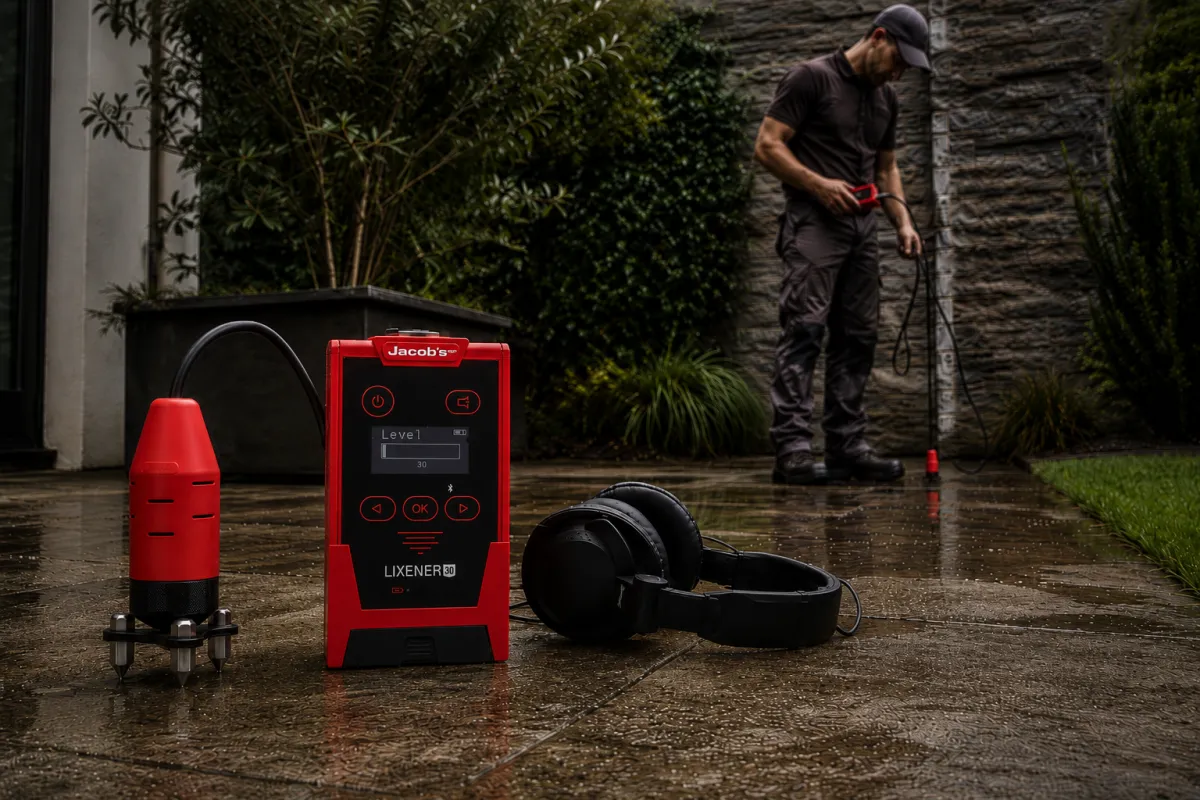
We hear it every day, someone waits weeks to purchase, then suddenly they need it urgently for a job they have lined up — don't get caught empty handed.
LIXENER30
$2,950
Ships in 24hrs from Florida Service Center*
Lixener30 Unit, acoustic sensor & wired headset
Tripod, 3-pc probe rod, magnetic base, hard case, charger
1-yr warranty + lifetime service
Premium Support
Pay over 6 months with 0.00% APR

Water Leak Detection Equipment


