
Leak Detection Business - Strategy Articles
From getting customers to delivering your services,
get our expert opinion and make managing your business easy!
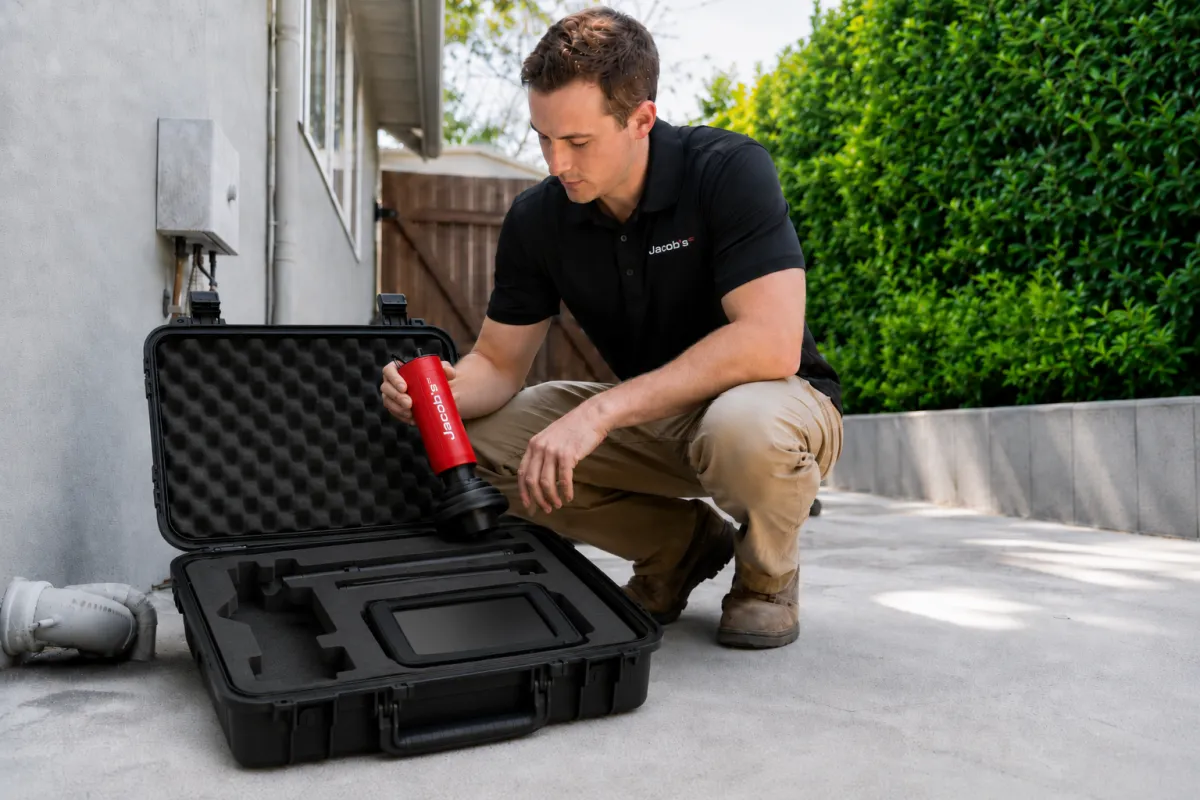
How to Start Offering Water Leak Detection Services: Equipment, Process, Pricing, and First Jobs
How to Start Offering Water Leak Detection Services: Equipment, Process, Pricing, and First Jobs
Water leak detection can be one of the best services to add if you are already working in plumbing, pool repair, irrigation, property maintenance, or underground utility work.
Why?
Because many customers already have the problem. They just do not know where the leak is.
They have a high water bill. Their pool is losing water. Their yard is soggy. There is moisture under a slab. A wall is wet. A line will not hold pressure. They know something is wrong, but they need someone who can locate the leak before more damage happens.
That is where professional leak detection becomes valuable.
Instead of guessing, digging randomly, breaking concrete in the wrong spot, or outsourcing the job to another company, you can offer leak detection yourself and keep more of the work in-house.
In this guide, we will cover what equipment you need, how the process works, what types of jobs to start with, how to think about pricing, and how to get your first leak detection customers.
Why Add Leak Detection to Your Business?
Leak detection is not just another small service call. It is a high-value diagnostic service.
Customers are not only paying you to “find water.” They are paying for certainty.
They want to know:
“Where is the leak?”
“Do we need to dig?”
“Do we need to break the slab?”
“Is this coming from the pool, the plumbing, the irrigation system, or somewhere else?”
“Can we avoid unnecessary damage?”
That confidence has real value.
For plumbers, pool companies, irrigation contractors, and maintenance teams, leak detection can also lead directly into repair work. Once you locate the problem, the customer often still needs someone to fix the pipe, fitting, valve, pool line, slab leak, or underground service line.
That means leak detection can create revenue in two ways:
First, from the diagnostic leak detection fee.
Second, from the repair work that comes after the leak is found.
Many contractors also add leak detection because they are tired of outsourcing profitable jobs. If you already get calls for hidden leaks, high water bills, slab leaks, pool leaks, or underground water loss, adding leak detection allows you to keep control of the customer relationship.
Instead of saying:
“You need to call a leak detection company.”
You can say:
“We can locate it and repair it.”
Who Should Offer Water Leak Detection Services?
Leak detection is a strong add-on service for several types of businesses.
Plumbers
Plumbers are one of the best fits because they already receive calls about slab leaks, high water bills, wet floors, underground service lines, and hidden plumbing problems.
If you are already doing repairs, adding leak detection helps you find the problem before cutting, digging, or opening walls.
Pool Repair Companies
Pool companies often deal with customers who are constantly adding water, losing prime, seeing wet spots near the pool deck, or suspecting underground pool plumbing leaks.
Leak detection can become a premium add-on service that leads directly into pool plumbing repairs.
Irrigation Contractors
Irrigation systems can have long underground runs, multiple zones, valves, fittings, and lines hidden under grass or landscaping.
Leak detection can help irrigation contractors find underground water loss without digging up the entire yard.
Property Maintenance Teams
Apartment complexes, commercial properties, large HOAs, schools, municipalities, and facilities teams often deal with water loss across large properties.
Having leak detection equipment in-house can reduce delays, lower unnecessary damage, and help maintenance teams respond faster.
Restoration and Water Damage Companies
Restoration companies are often called after water damage has already happened. Leak detection can help identify the source faster, especially when the water source is not obvious.
What Equipment Do You Need to Start?
There are different methods of leak detection, but two of the most important tools are tracer gas detection and acoustic detection.
Each method has a different purpose.
1. Tracer Gas Leak Detector
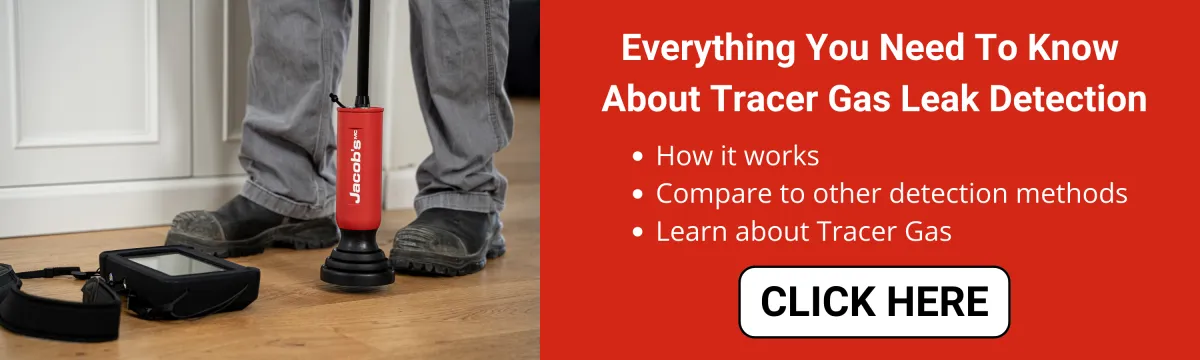
A tracer gas leak detector uses a safe gas mixture, commonly 5% hydrogen and 95% nitrogen. The gas is introduced into the pipe or system being tested. If there is a leak, the gas escapes through the leak opening and rises through soil, concrete, grass, asphalt, tile, or flooring. The detector senses the hydrogen and helps pinpoint the leak location from above ground.
This method is especially useful when the leak is underground, under concrete, very small, difficult to hear, or in a noisy environment.
For this type of work, the Sniffer430 is designed as a professional tracer gas water leak detector. It uses 5% hydrogen / 95% nitrogen tracer gas, which is commonly available through welding gas and industrial gas suppliers. Check out this tracer gas article explains how to get tracer gas in your area.
Tracer gas detection is valuable because it gives contractors a way to find leaks without relying only on sound. Acoustic detection can be helpful, but some leaks are too quiet, too deep, or located in environments where background noise makes listening difficult.
2. Acoustic Leak Detector
An acoustic leak detector helps the user listen for the sound of water escaping from a pipe.
This can be useful for certain pressurized lines, larger leaks, large-diameter lines, some slab situations, and jobs where the leak produces a clear sound.
The Lixener30 is an acoustic leak detector that can be used as a supplementary tool for listening-based leak detection. It is especially useful when you want to confirm leak noise, inspect certain lines, or add another method to your detection process.
Tracer Gas vs Acoustic: Which Should You Start With?
If your main goal is to find difficult underground leaks, small leaks, slab leaks, pool plumbing leaks, or leaks that are hard to hear, tracer gas is usually the stronger starting point. Generally speaking, it is significantly faster and easier to use a tracer gas detector
If you already do leak work and want an additional listening tool that will help you solve tricky leaks, acoustic detection can be a useful companion.
Many professionals benefit from having both because not every leak behaves the same way.
A simple way to think about it:
Tracer gas helps you follow gas escaping from the leak.
Acoustic detection helps you listen for water escaping from the leak.
The best tool depends on the job, the materials surrounding the leak, and the outside environment.
Make sure to watch our product comparison video to understand the differences better.
What Does a Basic Leak Detection Job Look Like?
Leak detection may sound complicated at first, but the basic process is straightforward when you have the right equipment.
Here is a simple example of how a professional leak detection job might work.
Step 1: Understand the Customer’s Problem
Start by asking what the customer noticed.
Common clues include:
A sudden high water bill.
A pool that keeps losing water.
A wet spot in the yard.
Warm or damp flooring.
Water coming through a wall.
A line that will not hold pressure.
A pump losing prime.
A section of concrete that stays wet.
The goal is to understand the symptom before choosing the test method.
Step 2: Identify the System Being Tested
Before using detection equipment, you need to understand what line or system you are investigating.
Is it a domestic water line?
A pool return line?
A pool suction line?
An irrigation zone?
A line under a slab?
A service line from the meter to the building?
A commercial water line?
The more clearly you isolate the system, the easier the detection process becomes.
Step 3: Isolate and Prepare the Line
In many cases, the line needs to be isolated so the test is focused on the suspected area.
Depending on the situation, this may involve shutting valves, plugging lines, disconnecting fixtures, or preparing the system for pressure testing.
The goal is to test the suspected line instead of the entire property at once.
Step 4: Introduce Tracer Gas When Appropriate
For tracer gas detection, the line is charged with the gas mixture.
If the pipe has a leak, the tracer gas escapes through the leak and moves toward the surface.
This is one reason tracer gas is so useful for underground leaks. Hydrogen molecules are very small and mobile, allowing the gas to move through soil, concrete, grass, asphalt, tile, and other surfaces.
Step 5: Scan the Area
Once the gas has been introduced, the technician scans the suspected area with the detector.
With the Sniffer430, the goal is to follow the readings and audio feedback to find the strongest concentration. The highest reading typically points toward the area where the gas is escaping.
This is one of the reasons tracer gas detection is attractive for contractors who are new to leak detection. It gives a clear process to follow instead of relying only on years of listening experience.
Step 6: Mark the Strongest Location
Once the strongest signal is found, mark the area.
This gives the customer confidence before digging, cutting, or breaking concrete.
The goal is not just to find the leak. The goal is to reduce unnecessary damage.
Step 7: Explain the Findings
A professional leak detection job should end with a clear explanation.
Tell the customer:
What was tested.
What was found.
Where the strongest indication appeared.
What the next repair step should be.
Inspect the surrounding area. Explain what uncertainties, if any, still exist.
This is important because leak detection is a trust-based service. Customers are often nervous about expensive repairs, so a clear explanation helps them feel confident moving forward.
Best First Leak Detection Jobs to Target
When you are starting out, you do not need to chase the most complicated jobs first.
Start with jobs that already match your current work and customer base.
1. High Water Bill Investigations
High water bill calls are one of the best starting points.
The customer already knows something is wrong, but they often do not know where the leak is. Often times, many others have been called out to find the leak. It could be an underground service line, irrigation system, pool line, slab leak, fixture issue, or another hidden problem.
These jobs are valuable because they can lead to repair work after the leak is found. With the right tools, it could be very straight forward.
Your existing pricing article explains that high water bill leak detection can vary widely depending on the scope of the job, with more complex properties and longer lines justifying higher pricing.
2. Underground Service Line Leaks
Underground water lines are a strong fit for tracer gas detection.
These leaks are often hidden under grass, soil, driveways, sidewalks, or landscaping. Guessing can create unnecessary digging and customer frustration.
With tracer gas, you can pressurize the line, scan the surface, and look for the strongest gas reading before excavation.
3. Pool Plumbing Leaks
Pool leak detection is a strong opportunity for pool repair companies and plumbers.
Customers may notice that the pool level keeps dropping, the system loses prime, or wet areas are forming near the pool deck.
Once the leak is located, the customer often needs a repair to the pipe, fitting, skimmer line, return line, suction line, or equipment connection. Pool leak detection is strong add-on service for pool service companies because it can lead directly into repair work.
4. Slab Leak Detection
Slab leaks can be high-value jobs because the cost of guessing is high.
If the leak is under concrete, a wrong location can mean unnecessary demolition, extra labor, and an unhappy customer.
Tracer gas can be especially useful in slab situations because it helps identify where gas is escaping through the slab or surrounding materials.
These jobs can be more serious, so they require care, but they are also one of the strongest reasons contractors invest in professional leak detection equipment.
5. Irrigation and Yard Leaks
Irrigation leaks can be frustrating because the system may cover a large area with multiple branches, valves, and zones.
Leak detection can help narrow down the problem and avoid digging up large sections of a yard.
This is a good fit for irrigation contractors, landscapers, property maintenance teams, and plumbers who handle outdoor water lines.
How Much Should You Charge for Leak Detection?
Leak detection should usually be priced as a diagnostic service, not just hourly labor.
The customer is paying for the result: locating the leak and avoiding unnecessary damage.
Pricing depends on several factors:
The type of leak.
The complexity of the system.
The size of the property.
The urgency of the job.
The amount of isolation required.
The distance of the line.
Whether the job is residential, commercial, pool-related, irrigation-related, or under a slab.
Check out our full article diving into this topic.
The key is to avoid selling leak detection as “just a quick test.”
Instead, position it as:
A way to avoid unnecessary digging.
A way to reduce property damage.
A way to locate the repair area faster.
A way to give the customer confidence before spending money on excavation or demolition.
That is what customers are really paying for.
How to Get Your First Leak Detection Customers
If you already run a plumbing, pool, irrigation, or maintenance business, your first customers may be closer than you think.
Add Leak Detection to Your Existing Calls
Start listening for leak-related symptoms on calls you already receive.
Examples:
“My water bill doubled.”
“There is a wet spot in the yard.”
“My pool keeps losing water.”
“The floor feels warm.”
“There is water near the baseboard.”
“The irrigation system seems to be leaking.”
“We think there is a slab leak.”
Every one of these calls can become a leak detection opportunity.
Contact Previous Customers
If you already have a customer list, send a simple announcement:
“We now offer professional water leak detection for underground lines, slab leaks, pool plumbing leaks, irrigation leaks, and high water bill issues.”
This works because many customers may not know you offer the service unless you tell them.
Partner With Other Contractors
Many companies get leak calls but do not own leak detection equipment.
You can build referral relationships with:
Small plumbing companies.
Pool service companies.
Irrigation contractors.
Restoration companies.
Property managers.
General contractors.
Apartment maintenance teams.
If they do not want to buy equipment themselves, they may send you work.
Make Simple Videos
You do not need a complicated video setup.
Show:
The equipment.
The tracer gas tank.
The line being tested.
The detector readings.
The marked leak location.
The repair after digging.
Short videos build confidence because customers and contractors can see the process.
This is especially useful because many buyers want proof that the equipment is real, practical, and easy to understand.
Create a Local Service Page
If you want homeowners or commercial customers to find you, create a website page targeting your area.
Example:
“Water Leak Detection in Orlando, FL”
“Pool Leak Detection in Dallas, TX”
“Slab Leak Detection in Phoenix, AZ”
“Underground Water Leak Detection in Tampa, FL”
These pages can help customers find you when they search for help with a specific leak problem.
Common Fears Before Getting Started
Many contractors are interested in leak detection but hesitate before buying equipment.
That is normal.
Here are the most common concerns.
“What if I do not know how to use the equipment?”
This is one of the biggest reasons contractors delay.
The good news is that tracer gas detection is easier to understand than many people expect.
With a tracer gas detector, you are not trying to guess based only on sound. You are introducing gas into the line, scanning the area, and following the readings to the strongest concentration.
That makes the process easier to learn, especially compared with methods that require years of listening experience.
“What if I do not get enough jobs?”
The best candidates for leak detection are businesses that already receive leak-related calls.
If you already deal with plumbing repairs, pool leaks, irrigation problems, wet areas, slab leaks, or high water bill complaints, the demand may already be there.
The equipment allows you to stop outsourcing and start keeping those jobs in-house.
“What if tracer gas is hard to find?”
Tracer gas is usually available through welding gas suppliers, industrial gas suppliers, specialty gas suppliers, and some HVAC or contractor supply sources.
The important thing is to ask for the mixture clearly: 5% hydrogen and 95% nitrogen. Some suppliers may also know it as forming gas. (Jacob's MC)
You may need to call a few places, but many contractors are able to find a local supplier.
“What if acoustic detection is enough?”
Acoustic detection is useful, but it is not perfect for every job.
It can be harder when the leak is very small, the property is noisy, the pipe is deep, the line does not transmit sound clearly, or the leak does not produce a strong noise.
That is why tracer gas is such a valuable method. It gives you another way to locate the leak when sound alone is not enough.
“What if I mark the wrong spot?”
No detection method should be treated carelessly. Good leak detection still requires a process.
The best approach is to isolate the line properly, control the test conditions, scan carefully, confirm the strongest indication, and explain findings honestly to the customer.
The goal is to increase confidence before repair, not make careless guesses.
Which Device Should You Choose?
If you want to start with the most accurate method for difficult hidden leaks, underground lines, pool plumbing, slab leaks, and small leaks, the Sniffer430 tracer gas leak detector is the stronger choice.
It is designed for contractors who want a practical way to locate leaks using safe 5% hydrogen / 95% nitrogen tracer gas.
If you also want a listening-based method, the Lixener30 acoustic leak detector can be a useful addition.
A simple recommendation:
Start with Sniffer430 if you want a premium leak detection tool for finding difficult leaks with tracer gas.
Add Lixener30 if you want an acoustic tool to support certain jobs and give yourself another detection method.
For many contractors, having both creates a more complete leak detection setup.
Final Thoughts
Starting a water leak detection service does not mean you have to become a full-time leak detection company overnight.
For many plumbers, pool companies, irrigation contractors, and maintenance teams, the smartest move is simply to add leak detection to the work they already do.
If you already get calls about high water bills, slab leaks, pool water loss, underground lines, wet yards, or hidden plumbing problems, leak detection gives you a way to turn those calls into a premium service.
The right equipment helps you locate leaks faster, avoid unnecessary damage, build customer confidence, and keep more repair work in-house.
Instead of guessing where the leak might be, you can give the customer what they really want:
A clear answer.
A marked location.
A plan for repair.
And confidence before digging, cutting, or breaking concrete.
For contractors who want to grow, stop outsourcing, and add a profitable service, professional water leak detection can be one of the smartest investments they make.
Water Leak Detection - Business Resources

Water Leak Detection Equipment


