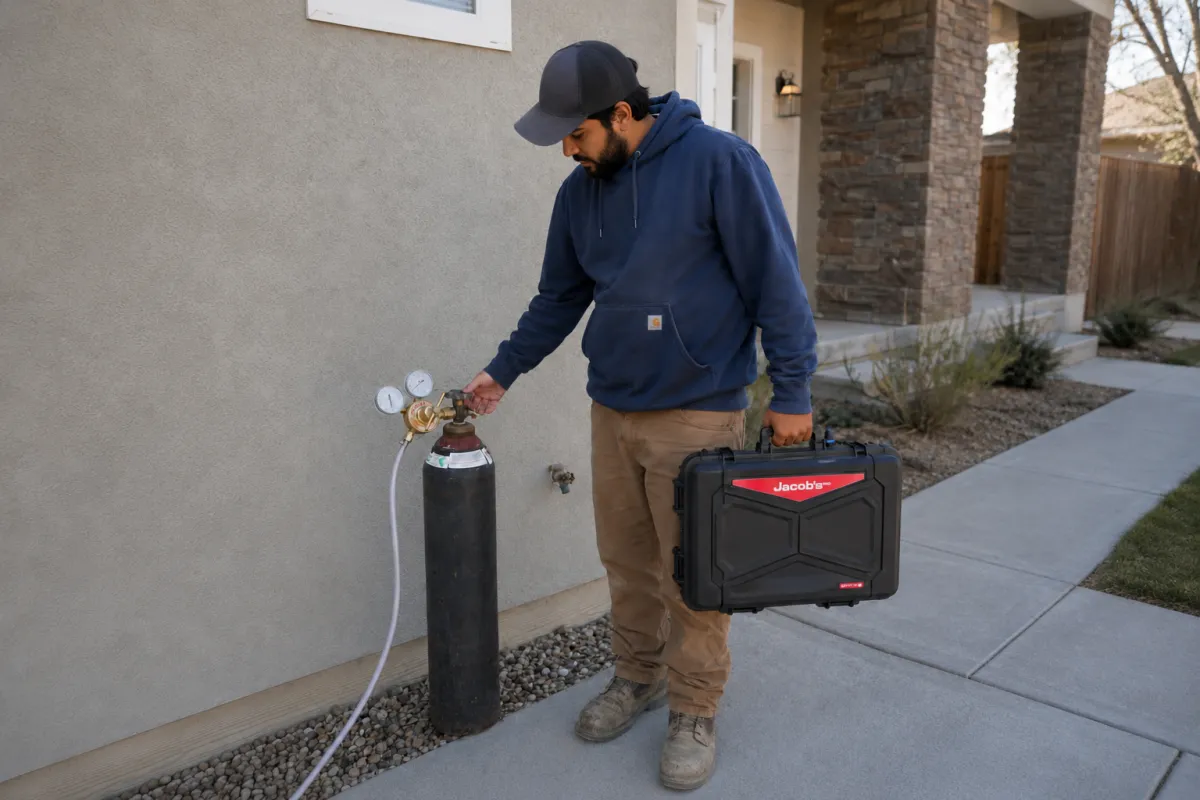
Where To Find Tracer Gas For Water Leak Detection
Where To Find Tracer Gas For Water Leak Detection
Where to Find Tracer Gas Tanks for Water Leak Detection
You May Need to Call a Few Places
What Type of Tank Should You Get?
Refillable Tank vs. Disposable Tank
What Information Should You Have Ready?
Where to Find Tracer Gas Tanks for Water Leak Detection
Leak Detection Tracer Gas is a safe, non-flammable, and non-toxic gas mixture consisting of 5% hydrogen and 95% nitrogen. It is commonly used in water leak detection because it can help identify even very small leaks in underground pipes, plumbing systems, pools, slabs, irrigation lines, and other pressurized systems.
When paired with a water leak detector such as the SNIFFER430, tracer gas helps pinpoint leak locations efficiently and with minimal property damage. Hydrogen molecules are extremely small and highly mobile, which allows the gas to escape through leaks and rise through soil, concrete, grass, asphalt, tile, or other surfaces. This makes the leak easier to locate from above ground using a hydrogen tracer gas detector.
Tracer gas leak detection is especially helpful when acoustic leak detection is difficult, when the leak is too small to hear, or when the exact leak location needs to be confirmed before digging or breaking concrete.
Where Can You Buy Tracer Gas?
We are commonly asked where to find tracer gas for leak detection. The good news is that tracer gas is usually available locally, but many contractors have never purchased it before, so the first few phone calls can sometimes be confusing.
In general, tracer gas can usually be found through companies that supply:
Industrial gases
Welding gases
Specialty gas mixtures
Calibration gases
HVAC or plumbing supply gases
Professional tool and contractor supplies
The most common place to start is with a local welding supply or industrial gas supplier. These companies already sell gas cylinders for welding, HVAC, manufacturing, laboratories, and other trades. Many of them can either supply the 5% hydrogen / 95% nitrogen mixture directly or order it for you.
What Should You Ask For?
When calling a supplier, it is important to ask for the gas mixture clearly. Some employees may not recognize the term “tracer gas” right away, but they may understand the actual gas mixture.
You can say:
“Hi, I’m looking for a 5% hydrogen / 95% nitrogen gas mixture for water leak detection. Do you carry that, or can you order it?”
You can also ask:
“Do you carry forming gas, 5% hydrogen in nitrogen?”
Some suppliers may refer to this gas mixture as forming gas, while others may list it as a specialty gas blend. The key detail is the mixture: 5% hydrogen and 95% nitrogen.
You May Need to Call a Few Places
One thing to keep in mind is that not every local gas supplier keeps this mixture in stock. This is normal.
Some locations may carry it regularly, while others may need to order it from a larger branch or specialty gas distributor. In some areas, you may need to call two or three suppliers before finding one that has it available.
If the first place you call says they do not have it, do not assume it is unavailable in your area. Ask if they can order it, or if they can recommend another branch or supplier that handles specialty gas mixtures.
A helpful question to ask is:
“Do you know another location or supplier nearby that carries specialty gas mixtures like 5% hydrogen in nitrogen?”
Gas suppliers often know which nearby companies handle less common gas blends.
Helpful Search Terms to Use
If you are searching online, try using several different terms. Different suppliers may list the same gas under different names.
Useful search terms include:
5% hydrogen 95% nitrogen gas
forming gas near me
forming gas welding supply
tracer gas leak detection gas
hydrogen nitrogen gas mixture
specialty gas supplier near me
industrial gas supplier near me
welding gas supplier near me
leak detection tracer gas
You can also search for national or regional gas suppliers in your area and then call the closest branch directly.
What Type of Tank Should You Get?
We recommend looking for a refillable aluminum tank when possible. Aluminum tanks are lighter and easier to carry to job sites, which is important for plumbers, leak detection specialists, pool repair companies, irrigation contractors, and maintenance teams who need a portable setup.
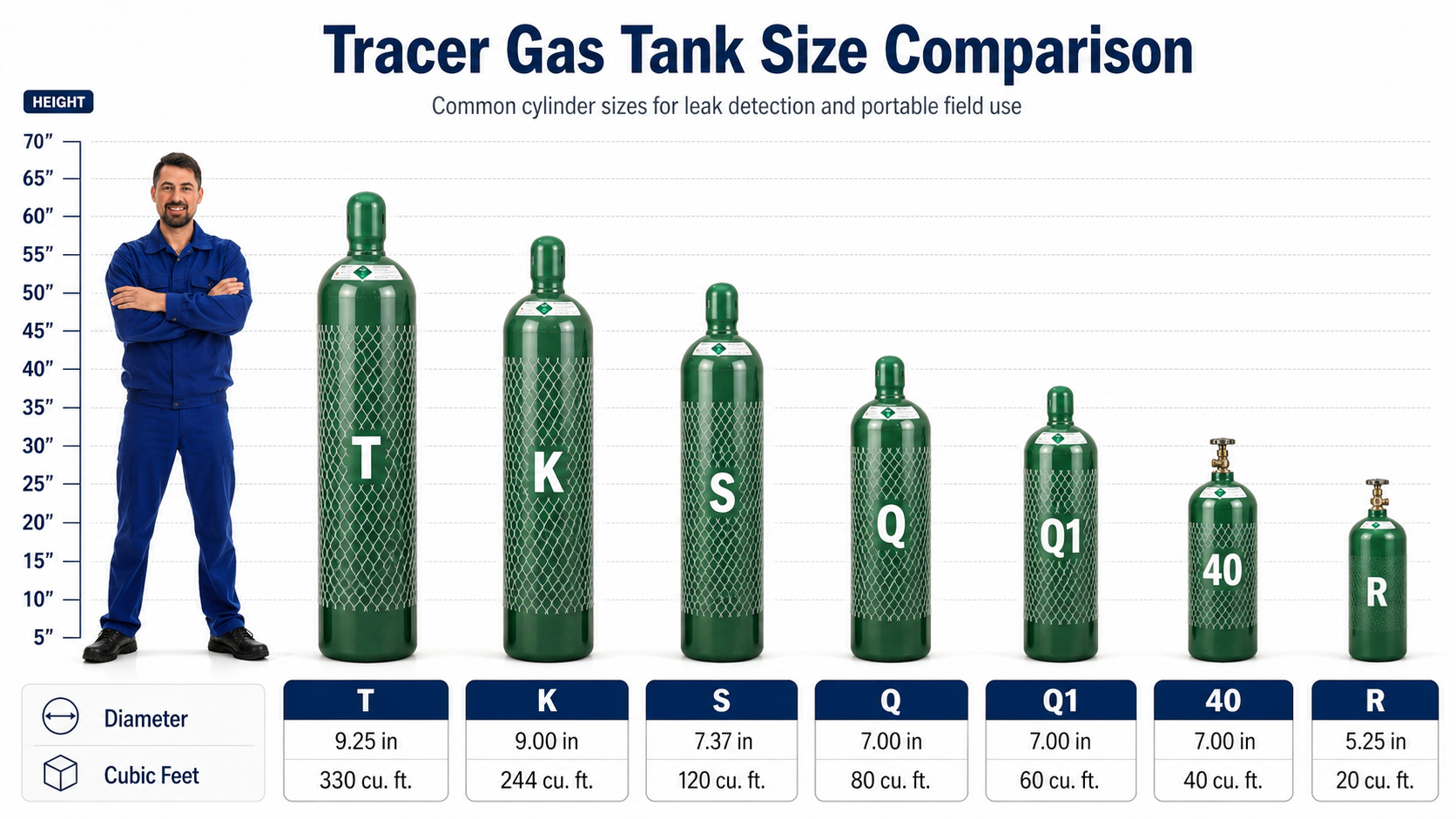
A tank around the size of Q in the size comparison image above, or slightly larger, is usually a practical option. A cylinder around this size should work for approximately 5–7 leak detection jobs in regular houses, although actual usage depends on the pipe size, test pressure, leak size, and how long the system needs to be charged.
For larger jobs, long lines, commercial properties, or irrigation systems, you may want a larger cylinder or a backup tank.
Please see our guide for a more precise calculation of Tracer Gas Volume and Usage.
Refillable Tank vs. Disposable Tank
For professional use, a refillable tank is usually the better option. Disposable cylinders may seem convenient, but they are often more expensive per job and may not be available in the correct gas mixture or volume.
A refillable tank gives you several advantages:
Lower cost over time
Better availability once you establish a supplier
More gas capacity for multiple jobs
More professional setup for regular leak detection work
Easier planning for repeat use
When you buy or rent a cylinder, ask the supplier how refills or exchanges work. Many gas suppliers use an exchange system, where you bring back the empty cylinder and receive a full one. Similar to buying propane.
Do You Buy or Rent the Tank?
This depends on the supplier. Some companies allow you to purchase a tank outright, while others prefer a rental or lease program. In many cases, industrial gas suppliers operate on a cylinder exchange system.
When calling, ask:
“Do I need to buy the cylinder, rent it, or use an exchange program?”
Also ask:
“If I buy a cylinder, can you refill it, or do you only exchange your own cylinders?”
This is important because some suppliers will only refill or exchange cylinders that are part of their own system.
What Information Should You Have Ready?
Before calling a supplier, it helps to know what you need. You do not need to be an expert, but having the basics ready will make the conversation easier.
Tell them you are looking for:
5% hydrogen / 95% nitrogen
For water leak detection
In a waist high portable refillable cylinder
And a recommended compatible regulator
You may also want to ask what cylinder sizes they recommend for portable field use.
Approximate Cost of Tracer Gas Tanks in the US
The cost of tracer gas can vary quite a bit depending on your location, the supplier, the cylinder size, and whether you are buying, renting, or exchanging the tank. In the US, 5% hydrogen / 95% nitrogen is often sold through welding supply and industrial gas companies as a specialty gas mixture, sometimes listed as forming gas or 5% hydrogen balance nitrogen. Large suppliers may list the gas online but still require you to enter a ZIP code or call for local price and availability. (Airgas)
As a general estimate, many customers should expect the gas refill itself to cost somewhere around $75–$150, depending on cylinder size and supplier.
A good question to ask is:
“What would my total out-the-door cost be for a portable cylinder of 5% hydrogen / 95% nitrogen, and what will future refills or exchanges cost?”
Once you have a local supplier set up, future refills or exchanges are usually much simpler than the first purchase.
Important Safety Note
The recommended tracer gas mixture is 5% hydrogen and 95% nitrogen. This mixture is commonly used because it is safe for leak detection applications when handled properly. Always follow the gas supplier’s handling instructions, cylinder storage guidelines, and local safety requirements.
Do not use pure hydrogen for this type of work. Make sure you are requesting the correct mixture.
Final Tip
If you are new to tracer gas leak detection, finding your first tank may take a little effort. That is completely normal. Many plumbers and leak detection contractors have never purchased this gas before, and some local suppliers may not immediately know what you are asking for.
Start with welding supply and industrial gas companies, ask specifically for 5% hydrogen / 95% nitrogen, and be prepared to call a few places. Once you find a local supplier, getting refills or exchanges in the future is usually much easier.
With the right tracer gas tank and a detector like the SNIFFER430, you can locate difficult leaks faster, confirm the leak location before digging, and offer a more professional leak detection service to your customers.


